Between what a meter reads and what a person feels.
Felt
I am an architect and lighting researcher. A room can pass every daylight metric and still feel harsh; a dim café can read as ‘inadequate’ and feel exactly right. My work sits in that gap — measuring light carefully with HDR imaging and photometry, and asking people what the light does to them.
Measured
- 2026–Assistant Professor, Department of Architecture, Tokyo University of Science
- 2025–2026Postdoctoral researcher, ETH Zürich ↗
- 2024Visiting postdoc, KTH Lighting Design ↗
- 2021–2024Postdoctoral researcher (Swiss Government Excellence Fellow 2021–22), EPFL ↗
- 2018–2020Postdoctoral researcher, TU Delft ↗
- 2007–2018BSc Architectural Studies, MSc Light & Lighting, PhD Built Environment, The Bartlett, UCL ↗
Light & Emotion
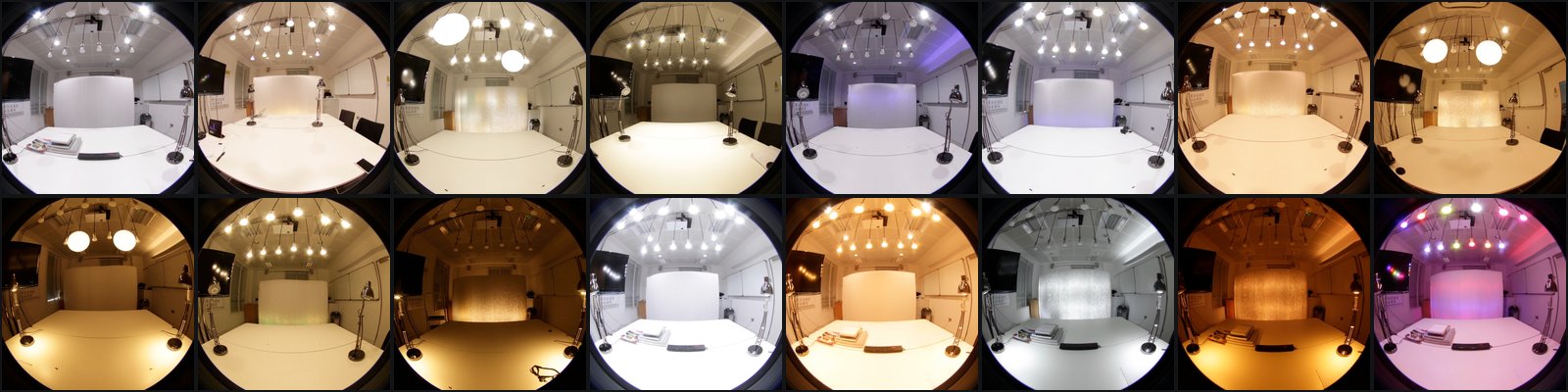
How does light make a room feel? My PhD argued that lighting should be designed for emotion, not only for the type of space — and put it to the test with lighting designers, in one office-like room under sixteen scenes.
HiDyn
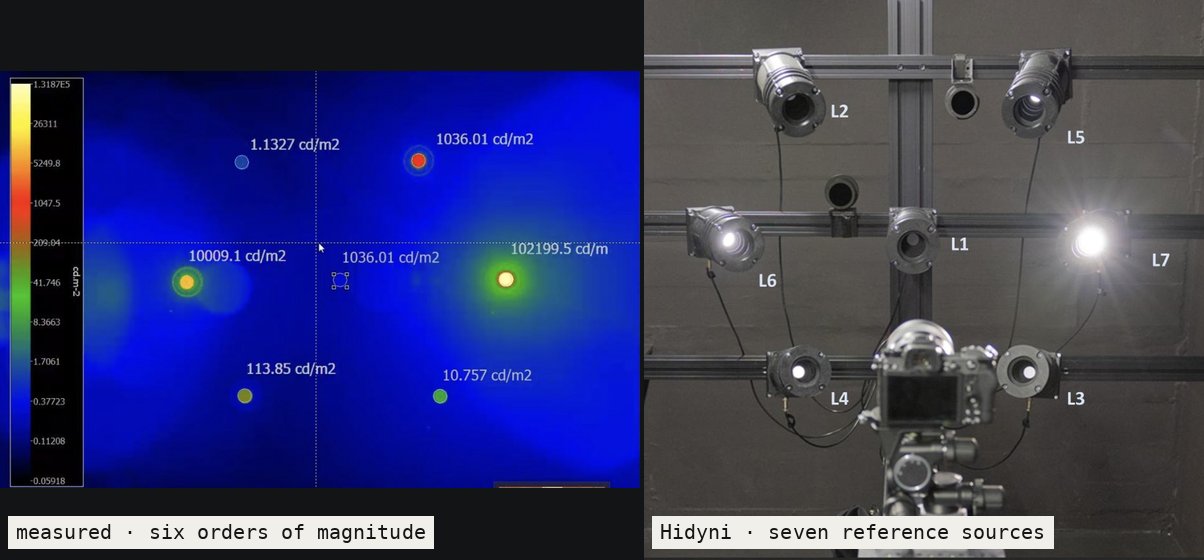
Glare is easy to feel and hard to measure. A street light against the night sky spans six orders of magnitude — far more than one camera exposure can hold. In HiDyn, a European metrology project, we tested how far HDR luminance cameras can be trusted for glare and obtrusive light, and wrote the good-practice guides that feed the standards.
Visual Comfort & Visual Interest
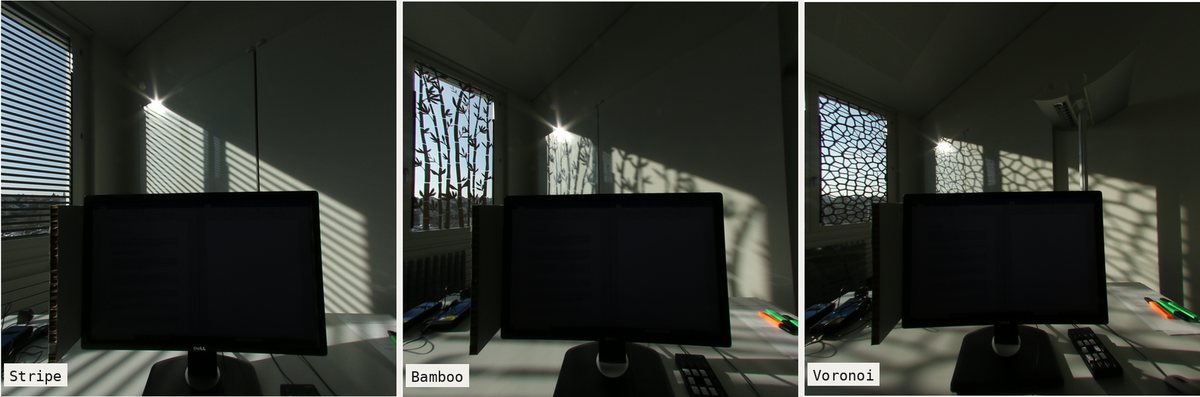
Do beautiful sun patterns make glare easier to live with? Thirty people worked with the sun in view behind three façade screens — stripes, bamboo and Voronoi. The pattern didn’t change how much glare they felt. How pleasant the scene felt did.
 openclosed
Solskin AI
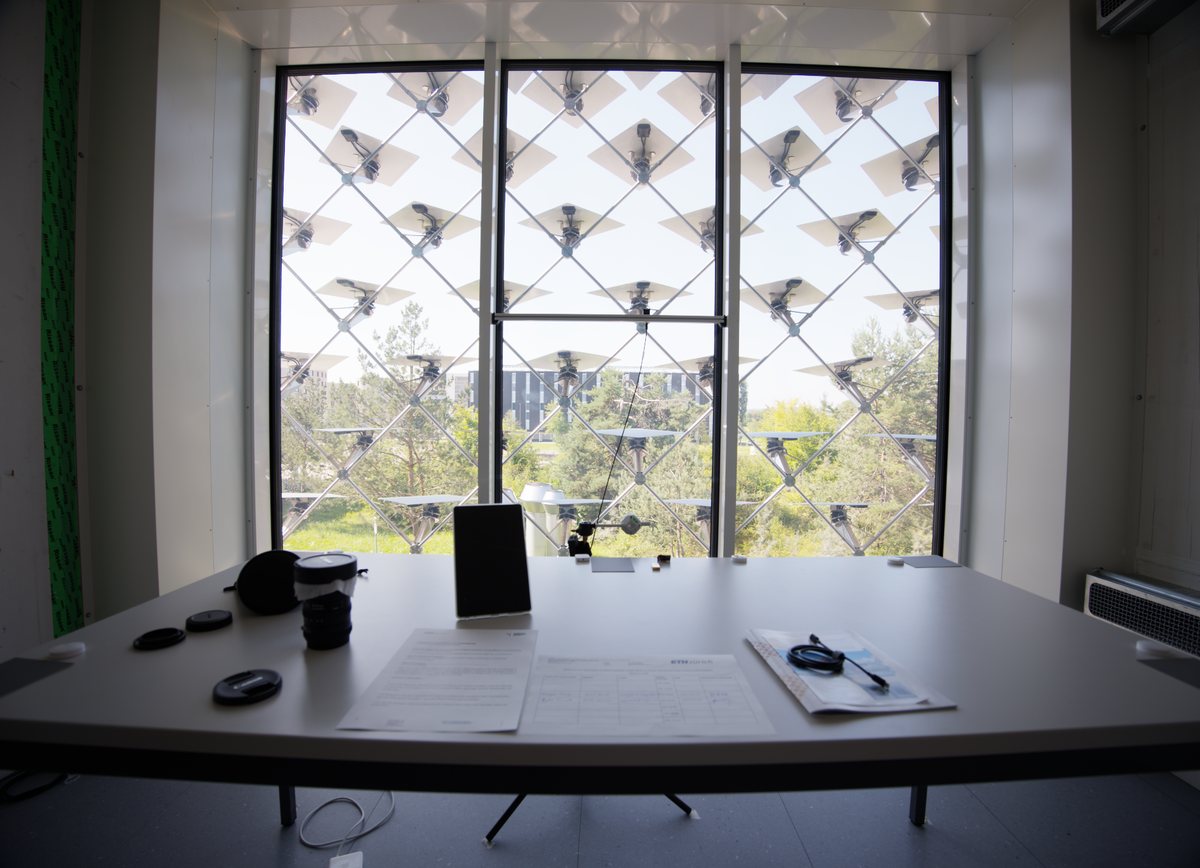
Solskin is an adaptive solar façade: its panels follow the sun, making electricity while shading the room. Solskin AI, with ETH Zürich and Zurich Soft Robotics, uses AI to control it so that building energy, occupant comfort and each person’s needs are met at once.
Three needs, one façade
Electricity, shade, view — the façade weighs all three. Drag the point and watch the panels in the room answer.
Light, shared.
- TU DelftIndoor Environment group, SenseLab — health and indoor environment in schools, offices and hospitals
- EPFLHDR calibration workflows and daylit sky categorisation
- TU Delft · 3DImage-based characterisation of material optical properties
- KTH Lighting DesignHealthy and comfortable classroom lighting
A spectrum of work
Selected
Spectrum — every line is a paper
All publications
The window is open.
A new lab at Tokyo University of Science, from July 2026. Students and collaborators curious about light, perception and HDR are welcome to write.
donghyun.kim@rs.tus.ac.jp